

Sorry, no sales person is available right now to take your call. Pls leave a message and we will reply to you via email as soon as possible.
800V Platforms: How Do Ceramic Substrates Safeguard EV Control Systems
2026-07-24
In the new energy vehicle industry's pursuit of higher power, longer range, and greater reliability, on-board power modules serve as the "heart" of the electronic control system, shouldering the core mission of power conversion and drive control. Their performance directly determines the vehicle's range, power output, and driving safety. Facing the harsh operating conditions of electric vehicles—high voltage, high current, extreme temperature differentials, and strong vibrations—traditional organic substrates can no longer meet the demands. Ceramic substrates, with their exceptional thermal, mechanical, and electrical performance, have successfully broken through to become the core substrate material for high-end on-board power modules and the key choice for top manufacturers optimizing their electronic control systems.
Ceramic substrates are by no means ordinary boards. They are specialized electronic base materials that use specialty ceramics as the foundation, bond high-purity copper layers securely onto the surface through precision bonding processes, and form customized circuit patterns via precise etching. They completely overcome the traditional substrate shortcomings of "poor heat dissipation, low temperature tolerance, and weak insulation," perfectly matching the extreme demands of electric vehicle power modules. They serve as the core bridge connecting semiconductor chips to external circuits, ensuring the stable operation of the electronic control system.
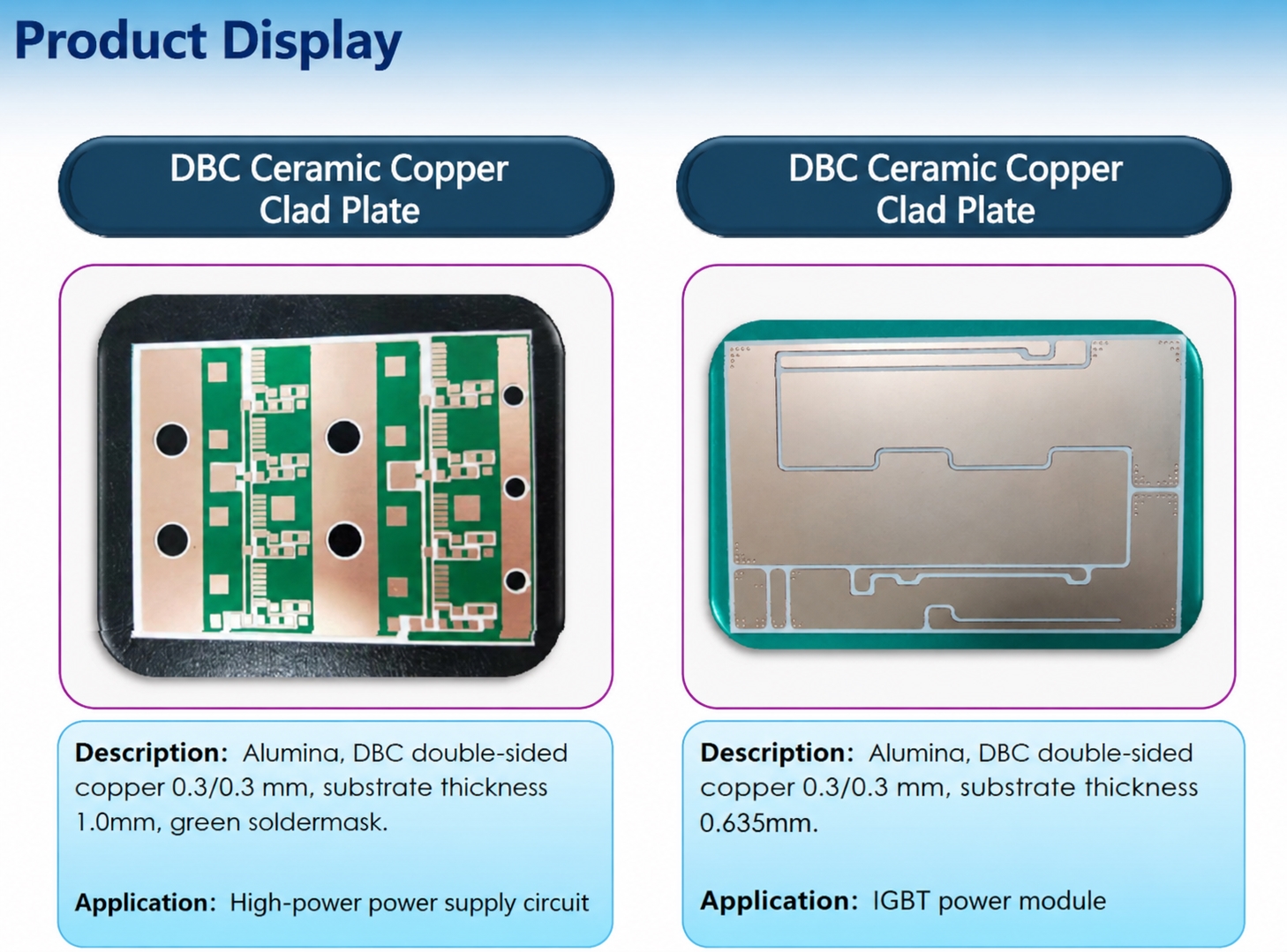
I. Three Core Performance Attributes – Solving Industry Pain Points for On-Board Power Modules
1. Exceptional Thermal Performance: Efficient Heat Dissipation, Eliminating Thermal Failure Risks
On-board power modules generate high-density heat during operation. Inefficient heat dissipation can easily lead to chip performance degradation, device aging, and even thermal failure. Ceramic substrates offer a broad, tunable range of thermal conductivity. High-end aluminum nitride (AlN) substrates achieve thermal conductivity as high as 170 W/m·K—dozens of times that of traditional FR4 organic substrates—rapidly dissipating chip heat and fundamentally preventing localized overheating.
Simultaneously, the coefficient of thermal expansion (CTE) of ceramic substrates is below 8 ppm/K, closely matching that of on-board power semiconductor chips. Under the complex operating conditions of frequent vehicle starts and stops and alternating high and low temperatures, this significantly reduces thermal stress impact, minimizes the risk of device cracking and delamination, and substantially extends the power module's service life, meeting the reliability requirements for the full vehicle lifecycle. Furthermore, ceramic substrates can operate stably in environments above 600°C, withstanding extreme cold and heat to easily handle diverse outdoor driving scenarios.
2. Superior Mechanical Performance: Vibration-Resistant and Durable, Suited for Complex On-Board Operating Conditions
Electric vehicles experience continuous vibration, jolting, and mechanical shocks during operation, demanding extremely high mechanical strength from the base material. Ceramic substrates offer high hardness, high flexural strength, excellent wear resistance, and outstanding impact resistance, effectively withstanding various mechanical stresses during driving. They also exhibit excellent dimensional stability, maintaining shape without deformation or warping over long-term use, preventing electronic control failures caused by circuit deformation or breakage. Additionally, they possess excellent acid/alkali resistance, oxidation resistance, and radiation resistance, withstanding harsh environments including moisture and oil contamination, demonstrating far greater stability than ordinary base materials.
3. Excellent Electrical Performance: High-Voltage Insulation, Ensuring Driving Safety
New energy vehicles are equipped with high-voltage electronic control systems, where insulation performance directly impacts driving safety. Ceramic substrates provide ultra-high insulation voltage resistance, enabling reliable high-voltage isolation and completely eliminating risks such as leakage and short circuits. Their low dielectric loss characteristics suit on-board high-frequency control signal transmission, reducing signal attenuation and interference to ensure precise power regulation. The high-purity copper layer bonded to the surface exhibits excellent electrical conductivity, capable of carrying high-current transmission, helping power modules achieve higher power density and promoting the miniaturization and weight reduction of electronic control systems.
II. Deep Empowerment of the Complete Vehicle, Covering Core Power Application Scenarios in Electric Vehicles
Currently, ceramic substrates have been fully integrated into the core power modules of new energy vehicles, becoming the standard base material for inverters, battery management systems (BMS), motor drive control modules, on-board chargers (OBC), and other critical components. In on-board inverters, they handle efficient DC-to-AC conversion, leveraging superior heat dissipation and high insulation to ensure stable and efficient high-power energy conversion. In battery management systems, ceramic substrates precisely regulate battery charging and discharging, improving battery utilization efficiency and range. In drive control modules, they help deliver smoother and more powerful motor output, comprehensively enhancing overall vehicle energy efficiency and driving reliability.
Beyond new energy vehicles, ceramic substrates are also widely used in industrial power supplies, photovoltaic wind power, aerospace, 5G communications, and other high-end fields, fully meeting the stringent demands for high power density, high frequency, high temperature, and high reliability. They are the core base material for next-generation power electronic devices.
III. Comparison of Main Substrate Materials: Selection Based on Requirements, Adapting to Different Application Scenarios
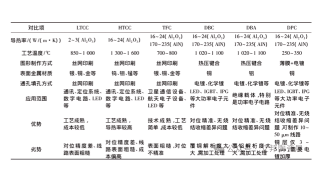
The mainstream ceramic substrate materials available on the market each have their own advantages and disadvantages. Manufacturers can choose flexibly based on power module positioning, cost budget, and performance requirements. A comparison of the three core substrate materials follows:
Alumina (Al₂O₃) Substrate: The cost-performance champion, offering balanced overall performance with thermal conductivity around 20–30 W/m·K, mature processing technology, and controllable costs. It is the first-choice substrate for conventional power modules, offering strong versatility and suitable for scenarios with moderate heat dissipation requirements.
Aluminum Nitride (AlN) Substrate: The premium choice for heat dissipation, with thermal conductivity up to 170 W/m·K, a CTE perfectly matched to silicon chips, high flexural strength, extreme heat dissipation performance, and maximum reliability. It is the core substrate material for high-end electric vehicle main inverters and high-power modules. Its drawbacks are higher cost and demanding processing requirements.
Silicon Nitride (Si₃N₄) Substrate: Specifically designed for high-stress scenarios, offering flexural strength and fracture toughness far exceeding those of similar materials, with outstanding thermal shock resistance capable of withstanding the strong stress loads from frequent and abrupt temperature cycling. It also delivers excellent thermal conductivity, making it suitable for on-board specialty power modules with extreme reliability requirements. Its disadvantages are complex processing and higher cost.
IV. Kinji: Deep Expertise in Ceramic Substrates, Building Automotive-Grade Manufacturing Capability
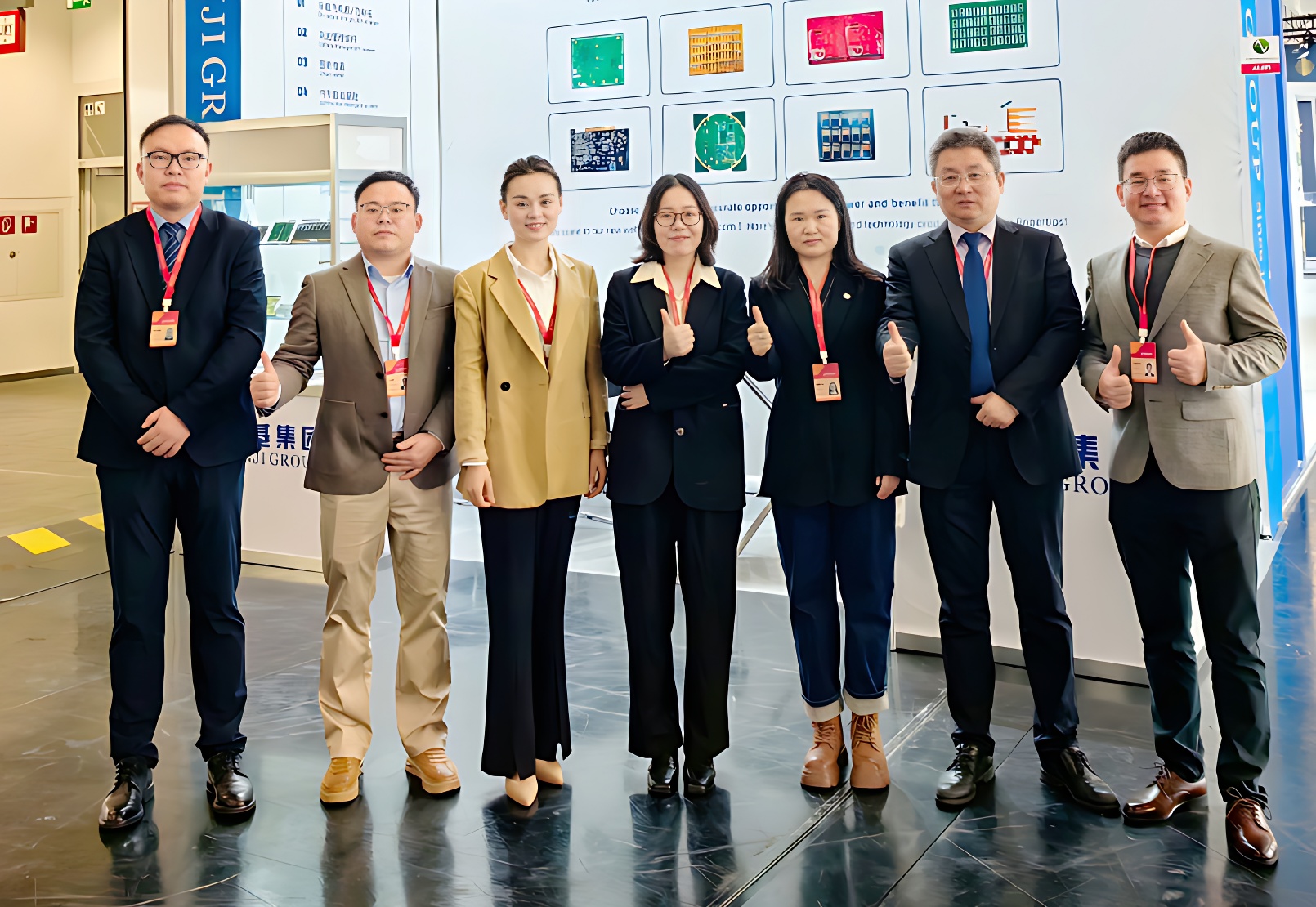
The performance of ceramic substrates depends critically on bonding processes and process control. The mainstream processes in the industry include DBC (Direct Bonded Copper), AMB (Active Metal Brazing), and DPV, among others. Process precision directly determines copper layer bonding strength, circuit accuracy, and long-term reliability. As a professional manufacturer deeply engaged in the R&D and mass production of ceramic substrates, Kinji, with its mature full-process manufacturing capabilities, has become a quality partner in the new energy vehicle industry chain, precisely matching the stringent standards of on-board power modules.

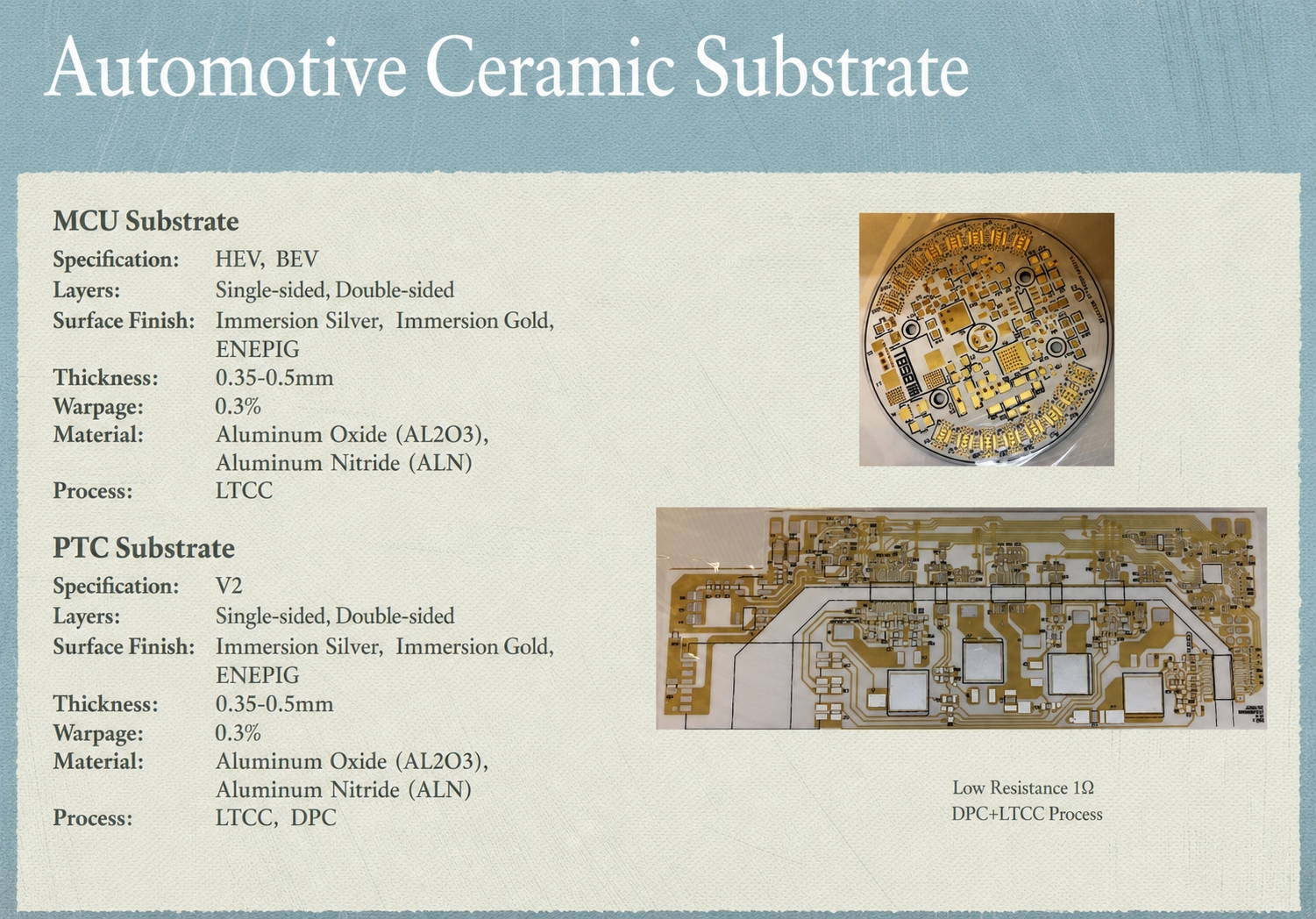
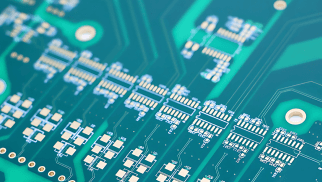
Kinji Automotive Ceramic Product Showcase
Kinji possesses the capability for mass production of all substrate material types, covering the full range of alumina, aluminum nitride, and silicon nitride ceramic substrates. It is proficient in both DBC and AMB core processes, achieving high-strength bonding between ceramics and copper layers—free from delamination or peeling—with bond strength far exceeding industry standards and excellent long-term stability. In terms of manufacturing precision, it enables high-precision circuit etching, micro-via processing, and customized surface treatment, supporting customers' proprietary circuit layout designs and perfectly adapting to the customized needs of electric vehicle power modules.
At the same time, Kinji strictly adheres to an automotive-grade quality control system, with full-process oversight from substrate material selection and process manufacturing to finished product inspection. It handles both small-batch prototyping and large-volume mass production capabilities, with fast response times and stable delivery, providing targeted solutions to the heat dissipation, insulation, and reliability challenges of new energy vehicle power modules, offering automakers and power module manufacturers a one-stop ceramic substrate solution.
V. Industry Trends: Ceramic Substrates Driving the Upgrade of the New Energy Vehicle Industry
With the rollout of 800V high-voltage platforms in new energy vehicles, power modules are evolving toward higher power density, smaller size, and longer service life. The market demand for ceramic substrates continues to rise, and they have become an irreplaceable core base material in the industry. They not only solve the heat dissipation and reliability challenges of on-board power modules but also promote the lightweighting and efficiency improvement of electronic control systems, helping to extend vehicle range and reduce energy consumption.
Looking ahead, as process technologies continue to improve and costs gradually decrease, ceramic substrates will further penetrate all categories of new energy vehicle power modules. Manufacturers with advanced manufacturing capabilities, represented by Kinji, will continue to drive technological innovation, empowering the high-quality development of the new energy vehicle industry with superior ceramic substrate products and laying a solid foundation for the industry's progression toward more advanced technology roadmaps.
trending news
Contact Us